• Building a Nieuport 11 replica •
• Controls •
The Nieuport uses traditional cable controls for rudder, ailerons and elevator.
The elevator cables are split, with seperate wires running to the top and bottom of the elevator horn.
.
.
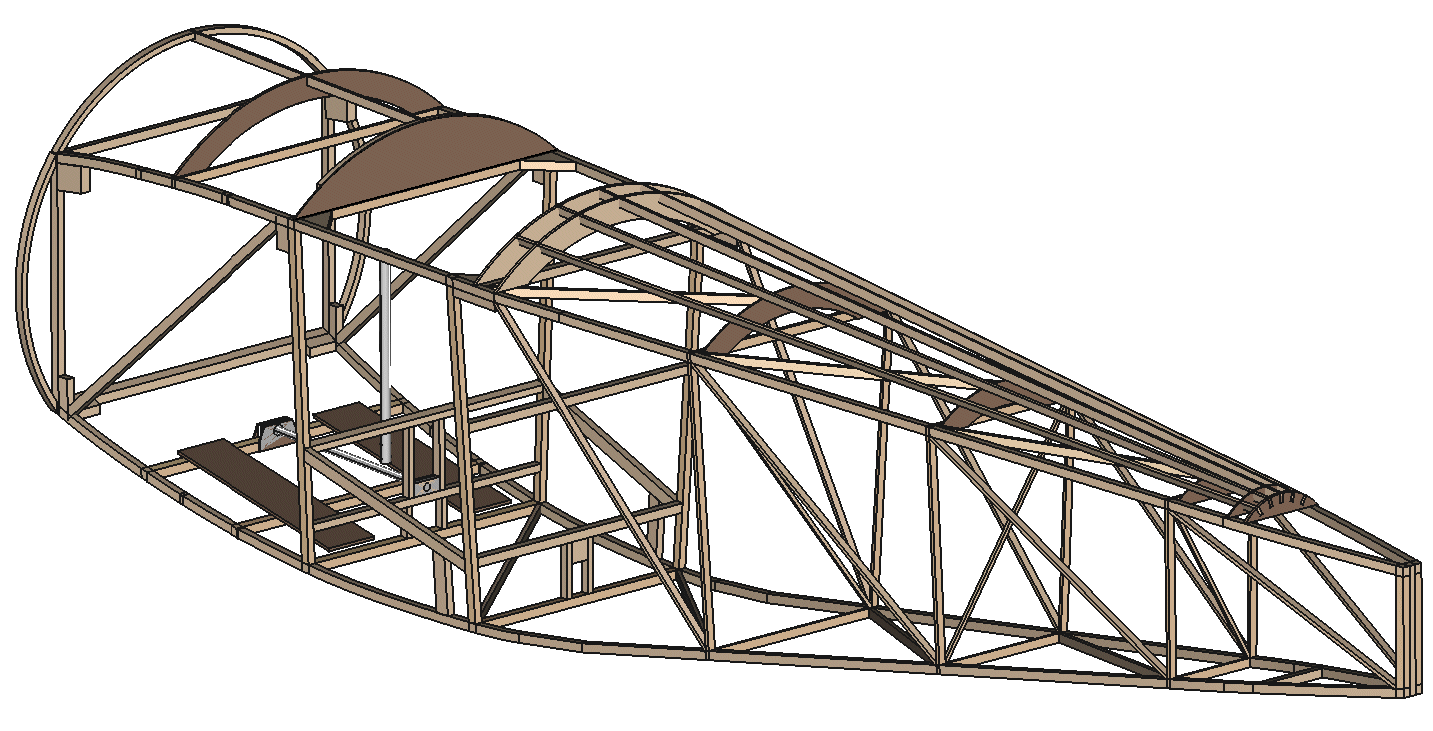
A steel torque tube is attached to the control column (by the two vertical brackets).
The elevators are controlled via a steel rod running back to an idler arm.
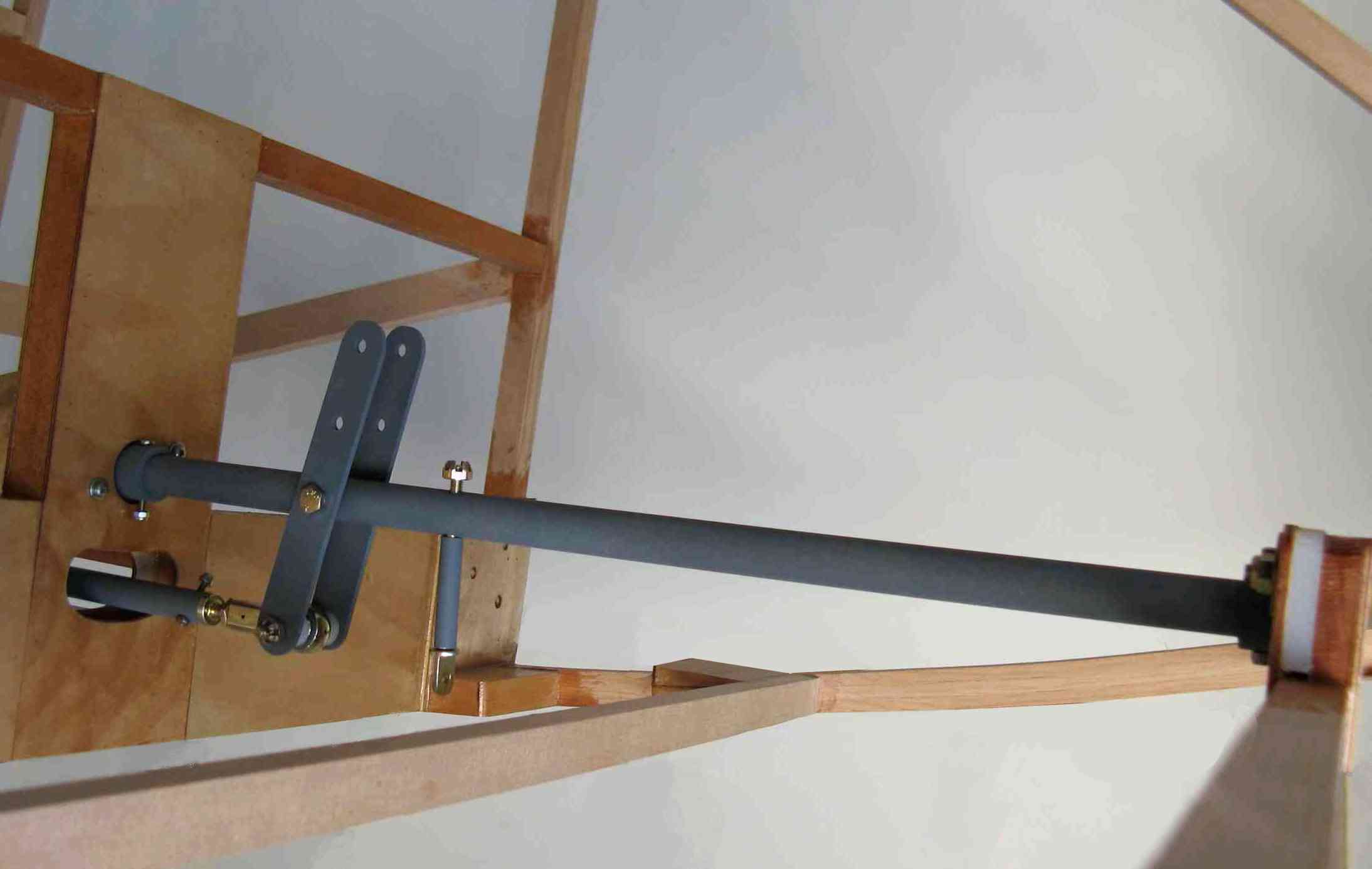
The idler arm.
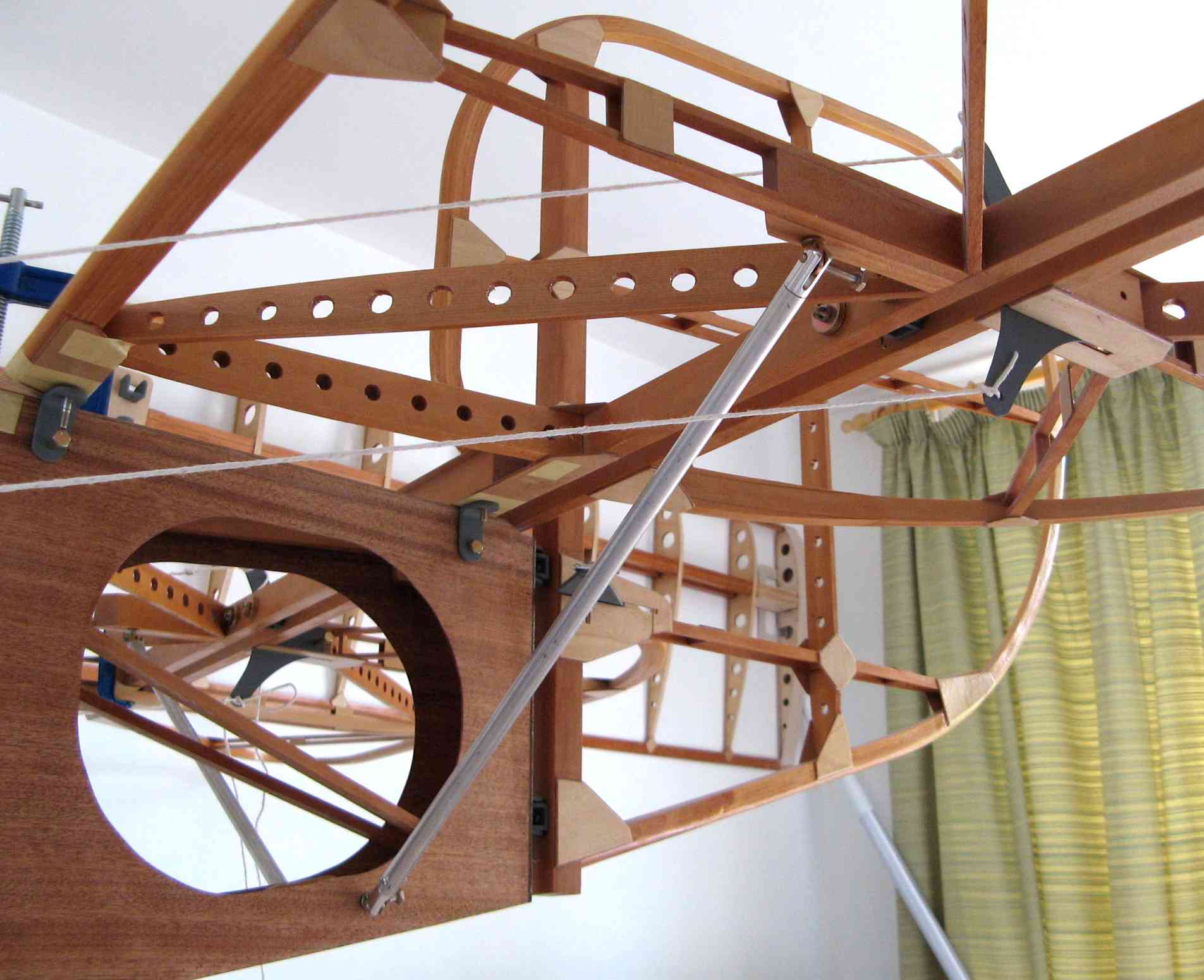
Separate elevator cables run back from the arm to a splitter plate, from which cables run to the top and bottom of the elevator.
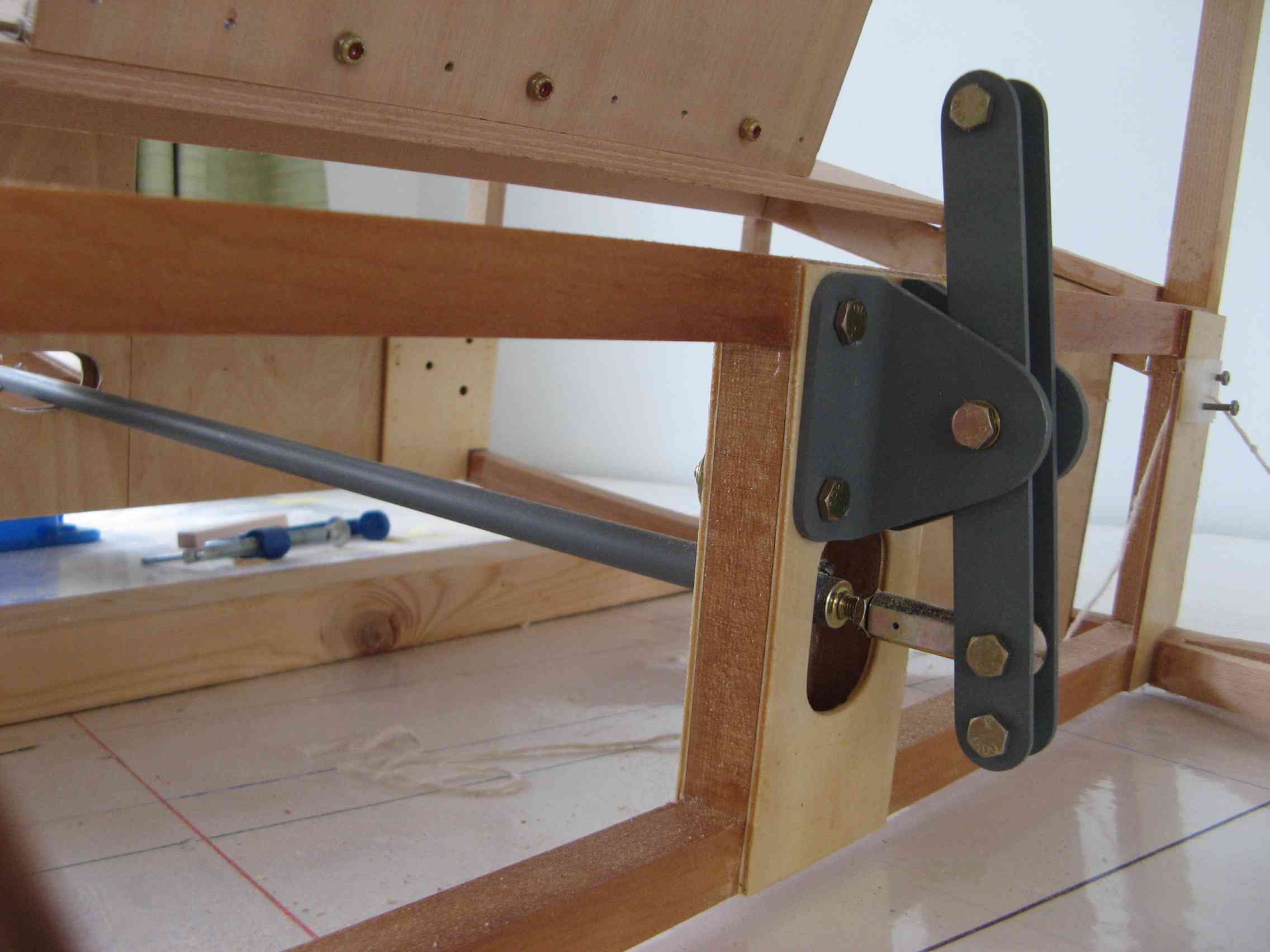
The aileron bellcrank and aileron horn.
One aileron cable runs through the wings connecting each bellcrank.
Second cables run from the bellcrank to pulleys in the centre section and from there down to a second pulley on the fuselage floor, joining to an eyebolt under the torque tube.
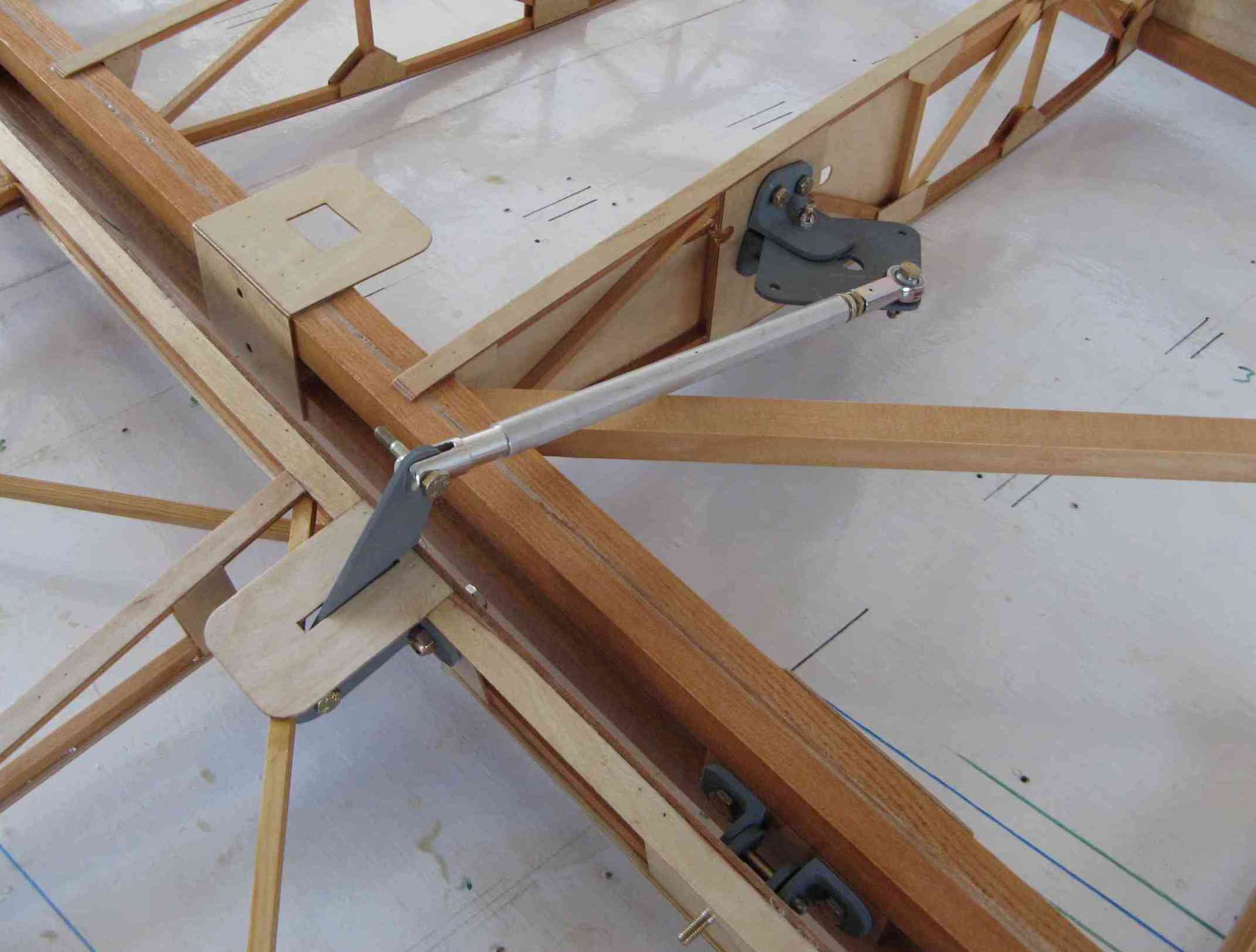
Setting up the rudder and elevator cables.
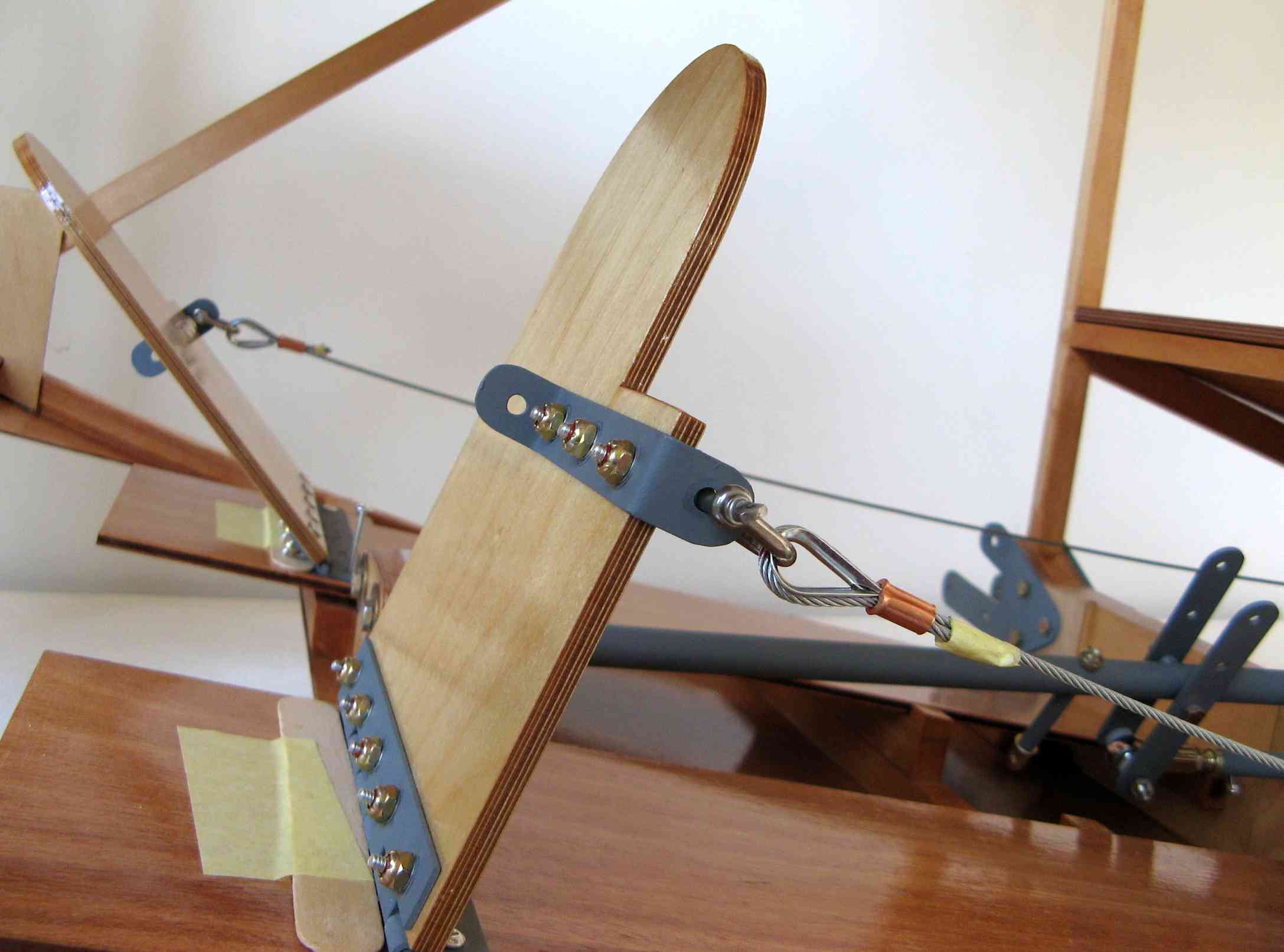
String was used initially to identify the cable runs and fairlead locations.
The rudder pedals are attached to the rudder with 3/32" cables.
No turnbuckles are used as the system is not closed i.e. both rudder pedals operate independently.
Forward bungees prevent the rudder pedals from flopping over.
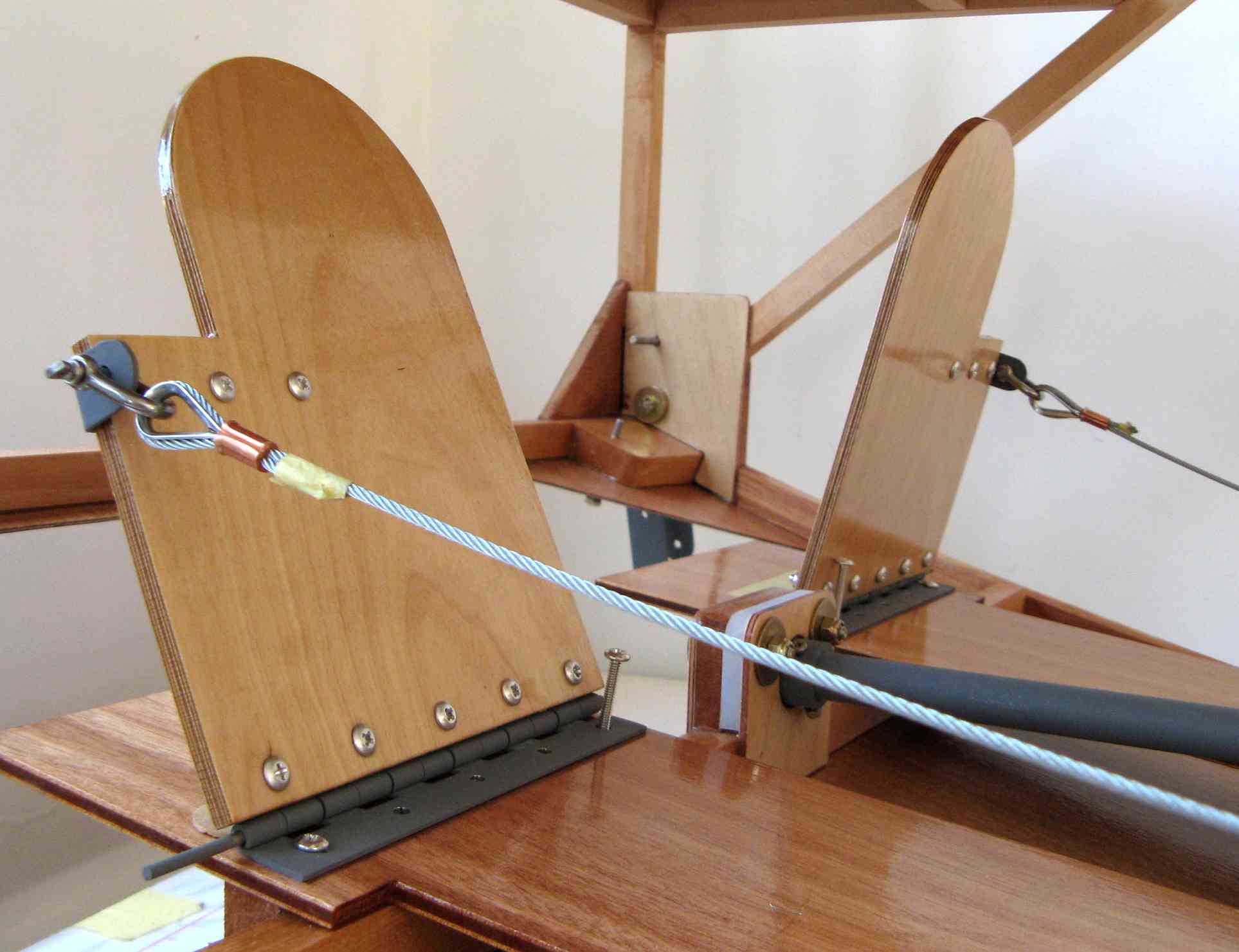
The hole on the front of the pedals is used to attach a bungee to the firewall.
This will keep the rudder cables tight and prevent them from flopping rearwards when not in use.
A rubber strip will limit forward movement in place of the lollipop stick!